Andrew, pull your hat on, lad, its cold out there!
Dont worry, Mum, Im not going to freeze up north, Ill manage somehow!
Those were his last words before he left.
Andrew boarded a coach to London, then caught a ship across the Atlantic to Canada. He promised he would be back in two years. Twelve years slipped by.
Margaret, his mother, remained in the old cottage she had lived in all her life. The same lace curtains, the same coal fire, the same rug she had woven when she was a girl. On the wall hung a photograph of Andrew in his graduation gown, beneath it a yellowed note: Ill be home soon, Mum. I promise.
Every Sunday Margaret wore a fresh kerchief and walked to the post office. She sent letters even though she knew none would be answered. She wrote about the garden, the winter, the neighbours cow. She always finished with the same words: Take care, my son. Mum loves you.
Sometimes the postwoman would say sympathetically, Aunt Margaret, Canada is far not all letters get through.
Thats all right, dear. If the post cant deliver, God will find a way.
Seasons turned; spring became autumn, and Margaret grew older unnoticed, like a candle slowly burning out without a flame. Each night, when she extinguished the lamp, she whispered, Good night, Andrew. Mum loves you.
In December a letter arrived, not from Andrew but from a woman Margaret had never met.
Dear Mrs. Margaret,
My name is Eleanor. I am Andrews wife. He often spoke of you, but I never found the courage to write. Forgive my belated note Andrew fell ill. He fought with all the strength he had, and then he passed peacefully, his hand clutching your photograph. At the very end he whispered,
Tell Mum Im coming home,
that I have always missed her.
I am sending you a box of his things.
With all our love,
Eleanor
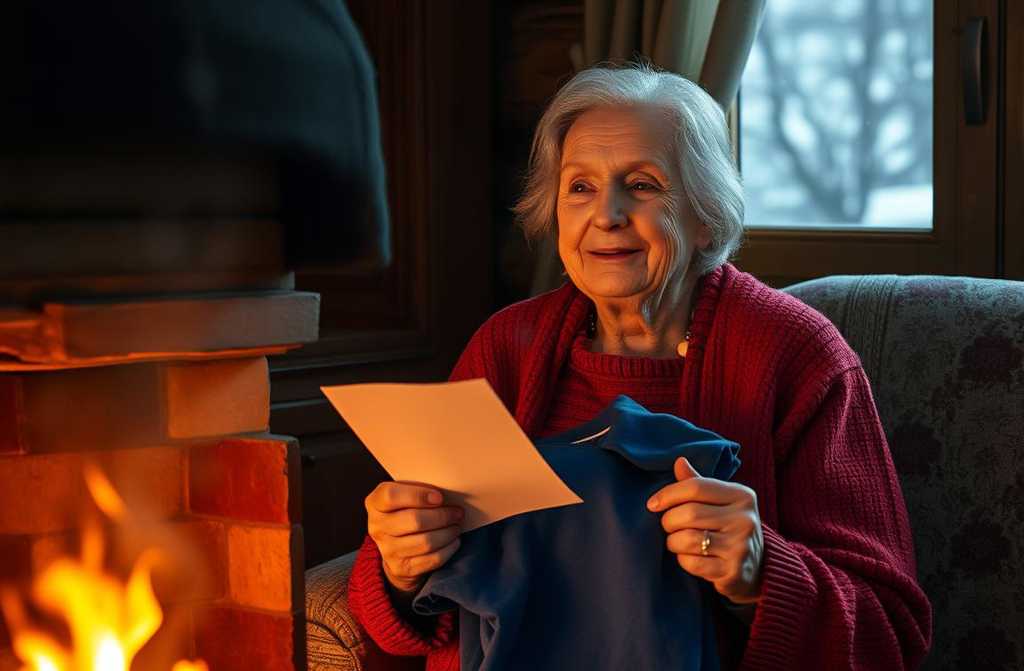
Margaret read the letter in silence, sat by the hearth, stared into the fire and said nothing. The next day the neighbours saw her carry a wooden crate home. She opened it slowly, as if fearing the pain would return. Inside lay a blue shirt, a small notebook filled with scribbled thoughts, and an envelope addressed, For Mum.
Her hands trembled as she unfolded the paper. The words smelled of foreign winters and distant sorrow.
Mum,
If youre reading this, I did not make it. I worked, saved money, but I never understood the one thing you cannot buytime. I missed you every morning when the snow fell. I dreamed of your voice and the scent of your stew. I may not have been the perfect son, but know that I loved you always, quietly. In the pocket of this shirt I have tucked a handful of earth from our garden. It stays with me. When things are hard, I think of you and hear you say, Endure, my boy, this too shall pass. If I do not return, do not weep. I am with youin the wind, in dreams, in the quiet. I am already home, Mum. The door need not be opened.
With love,
Your Andrew
Margaret pressed the letter to her heart, wept softly, the kind of quiet tears mothers shed when there is no one left to wait for, yet still someone to love.
She washed the shirt, dried it, ironed it, and draped it over the back of his chair at the kitchen table. From that day she never ate alone again. One February evening the postwoman found her asleep in the armchair, a letter clasped in her hand, a mug of tea on the table, a calm smile on her face. Beside her, the blue shirt lay as if hugging her.
They say that night a hush fell over the village. No dogs barked, no nightingales sang, not a sound was heard. The village was silent, as if someone had finally returned home. Perhaps Andrew kept his promise. Perhaps he did returnjust in a different way. Some promises never die; they are fulfilled softly, amid snow and tears. For a home is not always a place; sometimes it is the meeting we have longed for all our lives.
In the end, the greatest promise we can keep is to carry the love of those we have lost within us, for that is the true home of the heart.