We bought a little cottage out in the Cotswolds. The sellers were a young couple they told us their mum had passed away and the family no longer needed the old country house. Ever since Granny Edith died, nobody really visited the place; they only came around to hand over the keys.
Are you taking anything with you? I asked.
Why bother? they shrugged. Its just a heap of junk. Weve taken the family icons, the rest you can toss.
My husband Tom glanced at the bare walls where once framed pictures had hung. What about the photographs? he asked quietly. Why didnt you take those?
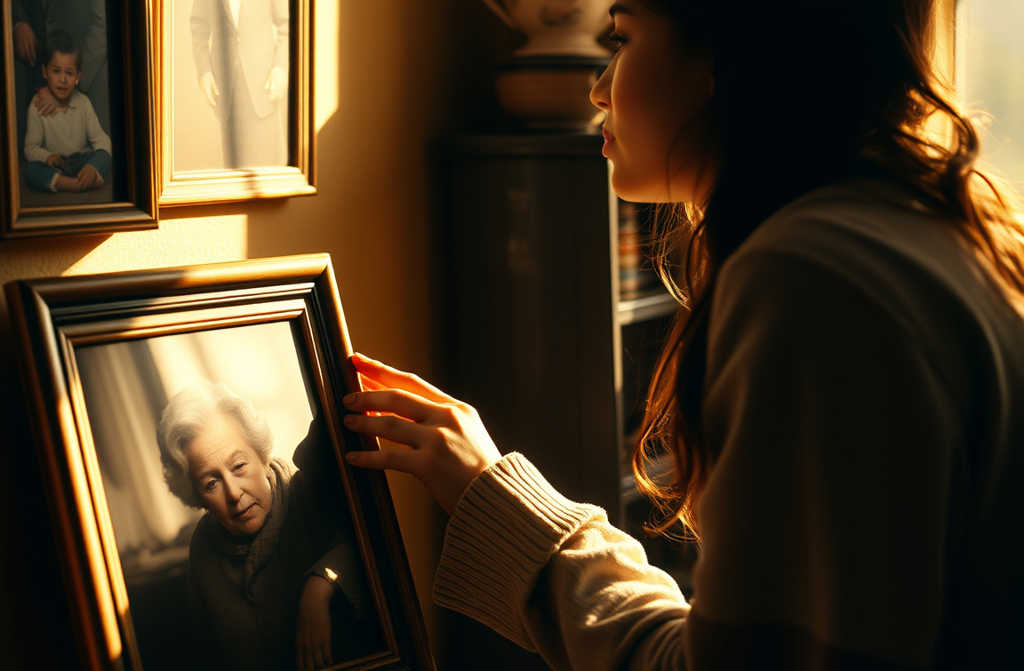
The walls seemed to stare back with faces men, women, children, an entire lineage. In the old days people decorated their homes not with fancy wallpaper but with memories. It reminded me of my own Gran, who always had a fresh picture in a frame: either me or my sister Milly.
She used to say, I get up in the morning, bow to the Almighty, kiss my husband, smile at the kids, give you a wink, and thats the start of a proper day. When she passed, we hung her portrait next to Granddad Arthurs. Now, every time we drive into the village which we now call the holiday home we blow a little kiss to the sky for her, and it feels like the cottage instantly smells of scones and warm mulled milk. You can almost feel her presence.
We never saw Granddad he was killed on the front line during the war but his picture hangs right in the centre, and Gran used to talk about him all the time. Wed stare at his face and feel as if he were sitting at the table with us. He stayed forever young in the photos, while she grew older. Their pictures now sit side by side. Those faded photos mean the world to me. If I had to pick something to take, Id choose just them. They called everything else junk. Everyone values things differently, but not everyone sees what truly matters.
After the purchase we started tidying up, and, honestly, I couldnt bring myself to throw away any of Grans belongings. It felt like shed lived for her children and grandchildren, and theyd simply forgotten her. How do I know? She used to write letters to them. At first she sent them off, got no reply, then she stopped. In the old wardrobe we found three neat stacks of unsent letters, each tied with a ribbon, full of love and tenderness.
Ill admit we read them. And then I understood why she never mailed them. She was afraid theyd get lost. She hoped that after she was gone, the kids would find the letters and read them. Inside those pages were her whole life: childhood, the war, the family saga, the memory of generations. She wrote so the story wouldnt fade.
I started to tear up.
Lets take these letters to her children, I told Tom. We cant just throw them away.
You think the kids will care more than the grandkids? he muttered bitterly. They never turned up.
Maybe theyre old and ill Ill call them.
Through a friend we got a number. On the other end a cheery womans voice said, Just chuck everything! She used to send us those letters in piles. We havent read them for ages. She made up stories because she had nothing else to do! Tom barely listened, hung up, and whispered, If she were still here, I dont know what Id say in anger. He glanced at me. You write. Put her story down so it doesnt vanish.
What if the relatives get cross?
Those people never read books, he sighed. But Ill get the proper permission anyway.
He did he travelled, signed a written consent. Meanwhile I went down into the cellar of the old cottages. It was cool down there, smelling of earth and time. Shelves held jars of jam and pickles, each with a faded label: Vanyas favourite mushrooms, Sunnys chanterelles, Cucumbers for Arthur, Raspberry jam for little Sasha. Vanya died ten years ago, as did Sunny and Arthur.
P.S. Anne Lukyanovna had six children. All of them died before her, except the youngest daughter the one who called everything junk. And mum waited, rolling jars, signing each with love. The last mushroom jars were dated last year. She was ninetythree.