The taxi hissed to a stop outside the brick terrace just after nine, the chill September air still clinging to a thin mist over the courtyard. Stephen Clarke, fiftytwo, scanned the narrow steps and tightened his grip on the pair of walking frames beside him. His right hand still lagged after the stroke, but the thought that everything would now be under constant watch cut sharper than the ache in his shoulder. James, his son, beat the driver to the curb, helped his father to his feet and stepped back, giving him space.
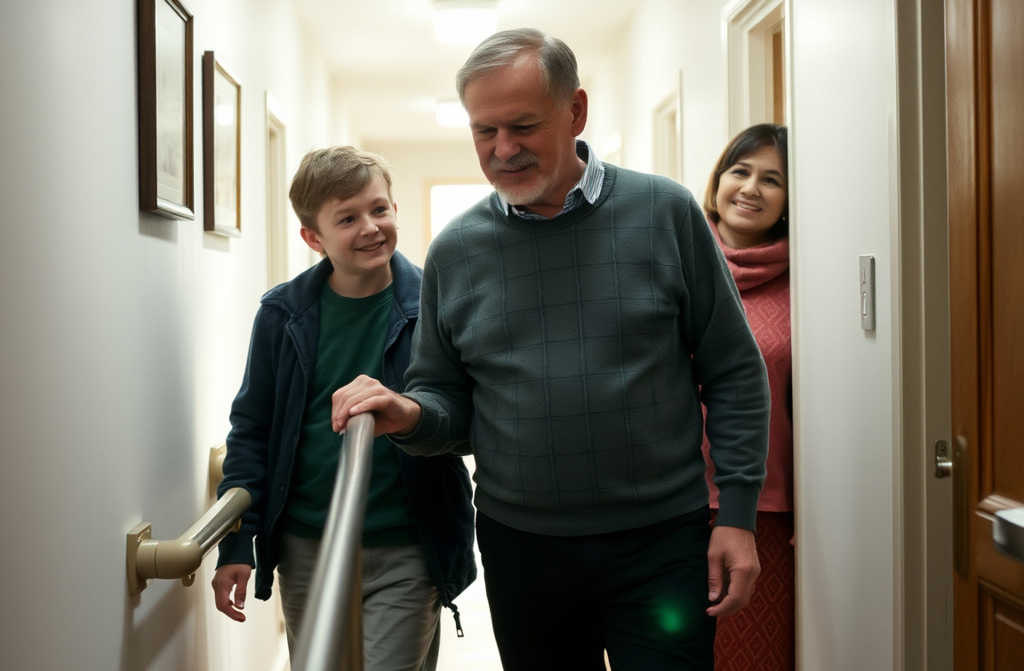
The hallway smelled of fresh paint and damp mop, as if the cleaner had just swept the tiles. Elizabeth checked every move Stephen made: whether he stumbled, caught a cold, or strained the scar on his neck from the catheter. On the landing of the first floor a new stool bolted to the railing waited. Sit for a minute, she said, her tone more command than request. Stephen lowered himself, feeling his weight shift onto his palms, and caught Jamess eye. James gave a quiet nod: Take it slow, were fine.
The flat opened up with familiar scentsmorning coffee, a crust of toast barely warm. Just beyond the doorway Stephen noticed changes: the carpet gone, replaced by a rubber mat with bright ridges, the doorways widened with plastic trims. Elizabeth led him to the sofa, slipped a finger into the cuff of the bloodpressure monitor, timing each reading like a metronome. Pressures normal, but you need to drink water straight away, she announced. Stephen merely nodded, while James wheeled the frames to the window, positioning them so his father could reach without help.
The first trial was the walk to the loo. The corridor seemed longer than any hospital wing, though it was only seven steps. His left foot angled slightly outward, his hand searched for the wall. Elizabeth walked beside him, pressed close enough to feel his back, catching every breath. When he reached the toilet and lowered himself carefully, she stood at the door: Call if you need anything. From the kitchen Jamess voice rang out, clattering mugshis way of saying he wanted to make breakfast himself, a break from his mothers constant oversight.
Morning stretched into a string of tiny tasks. Elizabeth took glucose readings, filled out a thick logbook, and copied the physiotherapy schedule onto it. In an hour we start the first exercises, then the tablets, then rest, she intoned, sounding like a nurse on duty. James, waiting for a lull, whispered to his father, Do you want to try reaching the window on your own? Stephen found himself reaching for the sill with his weaker right hand. He managed only half the motion, but the very act sparked a quiet fire inside him, a flame that his former life had stoked daily, now barely smoldering under the hospitals restraint.
In the days that followed the flat turned into a makeshift ward. Elizabeth set an alarm for every two hours, even at night checking whether Stephens leg had swelled. By lunch she plated a bland but proper soup; by evening she queued up breathingexercise videos, standing over Stephen, counting aloud. James came home from work and first cleared the table of empty boxes; the house felt more like a pharmacy than a home. He suggested Stephen take the stairs while the buildings lift was under repair, but Elizabeth snapped, Too early. Well start when the doctor says its safe. The words when the doctor says hung over any male desire to act.
Sunday morning the tension snapped at breakfast. Stephen tried to hold a spoon in his right hand. The porridge trembled, a few drops fell onto the tablecloth. Ive got it, Elizabeth said, taking his wrist. He flinched, his face set stubbornly. James gently stopped his mother, Let him do it himself, otherwise the muscles wont fire. The spoon slipped again, clattering against the plate, a hush falling over the kitchen. Stephen felt a cramp in his wrist, but the pain faded faster than his anger. Elizabeth lifted a napkin, wiped the table, and declared, First we learn without spilling, then She cut herself off, eyes on James. He stared out the window where the first yellow leaves clung to the wires.
That evening James brought two elastic bands for arm and shoulder exercises. He showed a video on his phone titled Home Rehabilitation, featuring a man his age pulling a rope while seated. Elizabeth froze by the doorway, Well get formal physiotherapy through the NHS, private sessions are a gamble. The argument rose, fell to a whisper, flared again. Stephen grew weary of being talked about as if he were a voiceless patient. He turned to the window, trying to catch the scent of wet earththe councils street cleaners had hosed the courtyard.
On Tuesday the regional hospital in Leeds called him in for a review. The NHS covered the travel; a wheelchairaccessible taxi lowered a lift platform. The neurologist spoke plainly: The first six months are the window of opportunity. Home workload is crucial, but only with safe methods. You can get outpatient physiotherapy under your NHS plan, with some sessions done remotely. Stephen noted how effortlessly the specialist paired independently with under supervision. Elizabeth nodded, asked about risks, while James recorded the schedule on his phone.
After the clinic the trio scattered like sunbeams. Elizabeth drove to the pharmacy for a new monitor, Stephen and James walked two laps around the local park. Breathing was hard, yet each step without the frames sparked a brief flash of triumph. Returning home they found Elizabeth rearranging medicines by day of the week. Youre exhausted today, were skipping the massage, she announced, switching off the TV as a football match blared. James snapped, A proper walk in fresh air is better than your 24hour supervision. His voice cracked, Stephen saw his sons fists clench.
Night was restless. At three a.m. Stephens throat was dry. Too tired of his wifes constant checking, he rose, leaned on the windowsill, took a step and lost his footing. The hallway wall caught his fall, but his elbow slammed into the plaster, a sharp sting shooting through him. The crash woke the household. Elizabeth sprang up, flicked on the lights, pressed an ice pack to the bruise, sniffling, This is what happens when you try to do it on your own. James stood pale, whispering, Sorry, Dad. In the morning Elizabeth tightened the rules even more, while James led his father to the window and handed him an empty cup to grip.
Weariness bred resentment. Stephen felt the homes warmth turn into a regimented watchtower. In a week he saw his wife smile only oncewhen the neighbour delivered a jar of pickles. James lingered later at work, fearing another clash. The silence in the house was no longer peace; it rang like a wire humming in the wind.
On the tenth of September rain drummed the streets, stripping the last colour from the leaves and forcing everyone inside. The kitchen filled with the aroma of roast turkey; the oven door sighed steam. Elizabeth spread pills on a saucer without looking at Stephen. James asked his father to try reaching the window unaided. No, Elizabeth snapped. James raised his voice, You cant keep him under a glass dome. The words hit the walls like rain on a windowpane.
Stephen rose. One step, then another. His hand trembled on the back of the chair. Elizabeth lunged to catch him, but he turned his head, Let me. His voice was hoarse, yet determined. James stepped back a halfpace, showing he was there but not smothering. Elizabeth froze in the kitchen, clutching the saucer with both hands. The chair slipped, his leg gave way, and Stephen stumbled. James caught him just in time. The clash amplified a storm of words: See! Elizabeth shouted. James snapped back, Were suffocating him!
Finally James dialed the rehab specialist the hospital had recommended. On video, a woman in a white coat and headphones appeared on the kitchen screen. I hear tension, she began, addressing the family without preamble. Stephen recounted the fall, the feeling of being boxed in. Elizabeth recalled his pulse readings. James asked for a stepbystep plan. The therapist explained that independent attempts are vital, but they must be surrounded by safety nets: railings, harnesses, clear goals. Familys role isnt to replace movement but to safeguard it. Divide duties: Elizabeth monitors pressure and meds, James handles walking drills and finemotor work. Stephen sets daily targets and tracks progress, she concluded, scheduling a home visit for the following week and daily telereports.
The call clicked off, rain still pattering against the curtain, but the room felt lighter, as if a window had been cracked open. Elizabeth placed the saucer down and sat beside her husband. James quietly adjusted the elastic band on Stephens wrist. Stephen squeezed the fabric with his weakened hand, feeling a modest resistance. He realised there was no turning back to the passive lull; it was either forward together or sinking again in fear.
After the therapists advice, the flats atmosphere shifted gradually. Elizabeth stopped compulsively taking readings every thirty minutes, and James grew more attentive without hovering. Their interactions settled into a pragmatic rhythm.
The next morning Stephen barely awoke when Elizabeth had already set the kettle to boil for tea. A new schedule hung on the fridge, listing medication times and exercises tailored for him, drafted jointly and incorporating the therapists recommendations. She focused on gathering the right doses, while James checked the weather, planning the best time for a short walk.
Stephen stared at the elastic band on the tablea reminder of the obstacles ahead, yet a symbol of his readiness to face them. His left arm moved a little easier after the daily routines the therapist had set.
The first solo stroll was rough but hopeful. Stephen stepped out of the building, walking frames ahead of him. James walked beside him, a steady hand for safety but not a leash. The crisp morning air over central England lifted Stephens spirits, and he took a few steps farther than he had managed in months.
Evenings saw Elizabeth preparing more varied meals, delighting the whole family. One night, watching her needlework, Stephen suddenly realised how long it had been since hed savoured simple pleasures. A desire to create something of his own sparked inside him.
Interest in life returned slowly, like a stream filling after a dry season. Stephen sensed that reclaiming his former self was achievable, piece by piece: walks, exercises, finemotor drills. He set modest daily goals and kept at them.
Though full recovery was still a distant horizon, each small win bolstered his resolve. It not only gave him strength to move forward but also made his family proud and more involved in his care.
In time the familys arguments faded as they understood that his path to a full life lay in shared effort and mutual respect. Stephens growing independence inspired everyone. He learned that together they could weather this trial, and that every tiny victory paved the way for greater progress.